I went to the village in Dali to attend an impressive indigo tie-dye workshop. This workshop not only allowed me to contact the traditional craft directly but also to gain an in-depth understanding of the cultural essence and origin of this art, and it also allowed me to experience the deeper meaning behind the culture – cultural appreciation. I decided to try to find an indigo tie-dye workshop for the Bai people in Yunnan when I returned to London, and invited three friends from different countries and cultural backgrounds to participate in my intervention (they had to have a poor understanding of Chinese culture and the culture of China’s ethnic minorities). The purpose is to enhance the participant’s knowledge and appreciation of China’s ethnic minority culture through this workshop, allowing them to personally experience and learn this traditional handicraft, thereby increasing respect for and value awareness of cultural diversity.
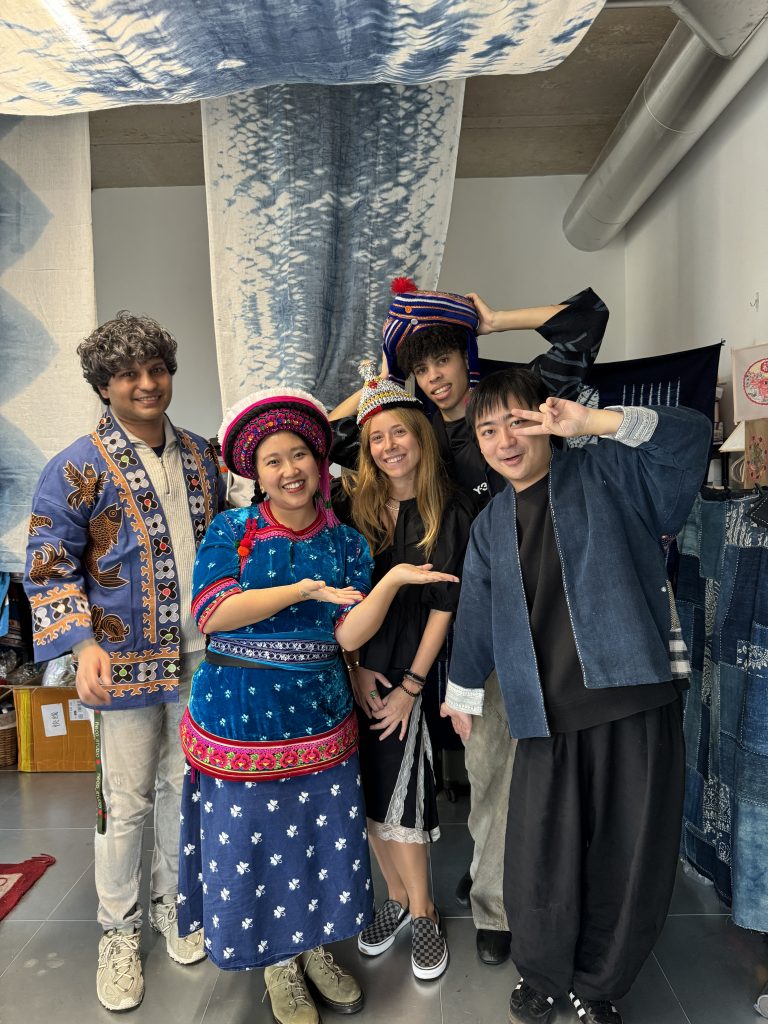
After returning to London, I contacted the Yunnan Province Compatriots Organization in London. I contacted Yiran, a Bai woman who opened a Chinese handicraft studio in the UK. We finally decided to hold an indigo tie-dye workshop in Yiran’s studio. She told me that her parents also run a textile workshop in the Dali Bai Autonomous Region, which is the workshop I went to. When asked about the differences between her tie-dye workshops in China and the UK, Yiran explained that her UK workshops took an international perspective, introducing which countries are the primary consumers of Bai tie-dye and the differences in Bai tie-dye in different regions. Her workshop covers the entire tie-dye process, from the initial stitching techniques to the final dyeing. Domestic courses usually only cover basic historical information and how to dye and weave.
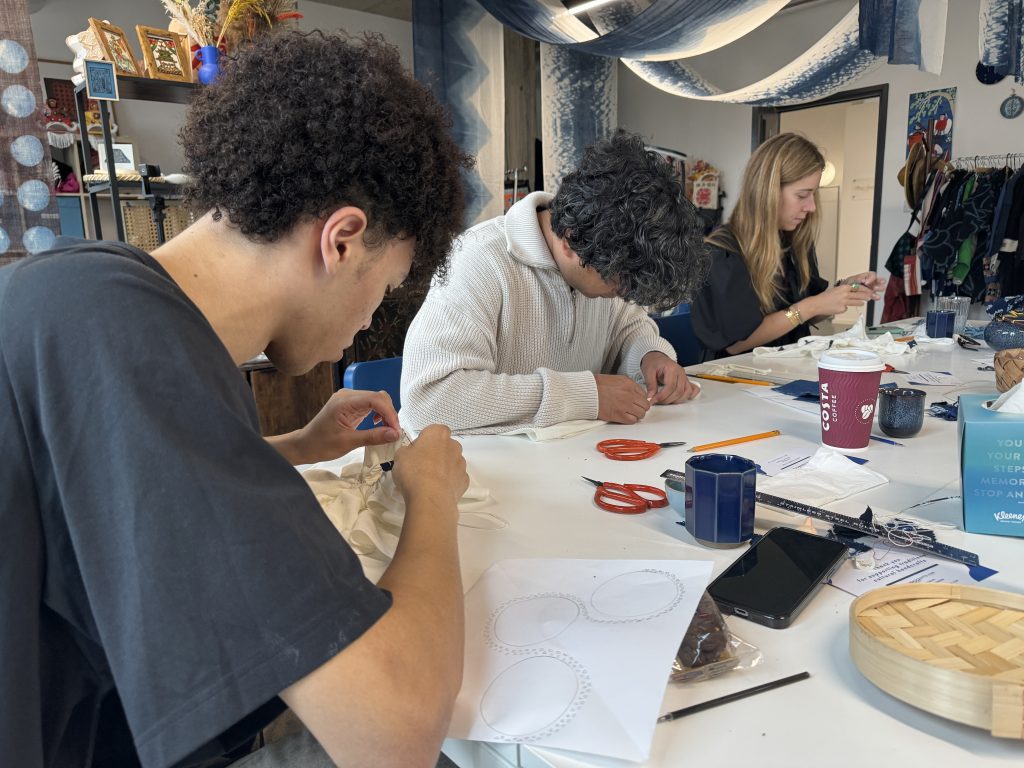
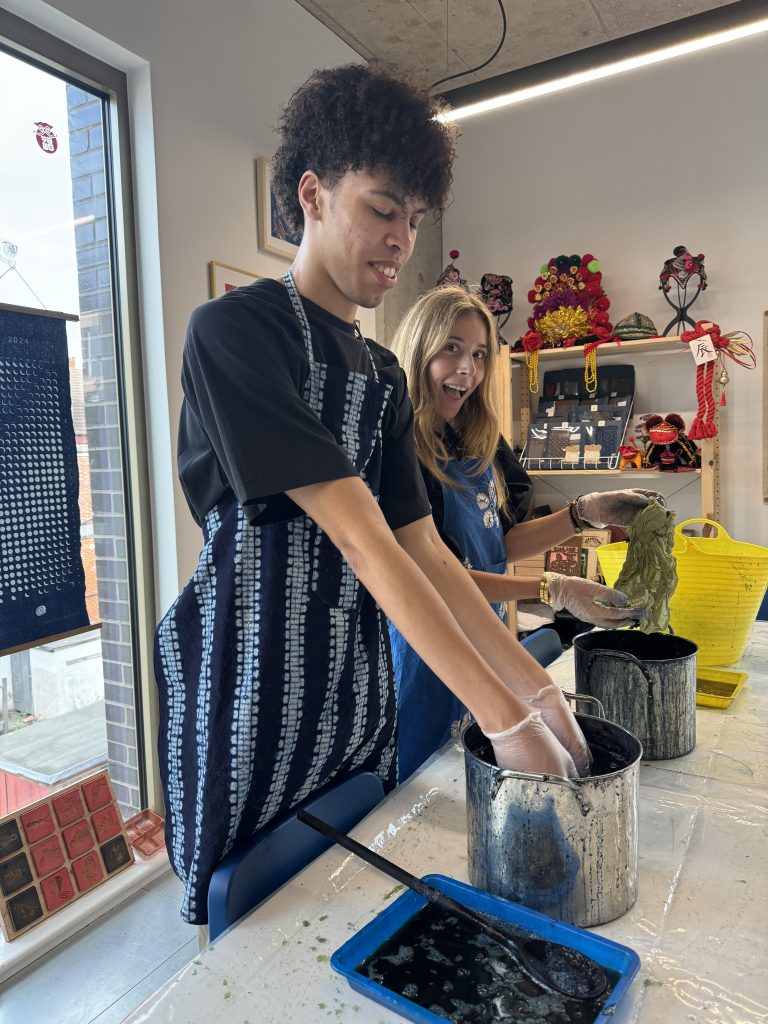
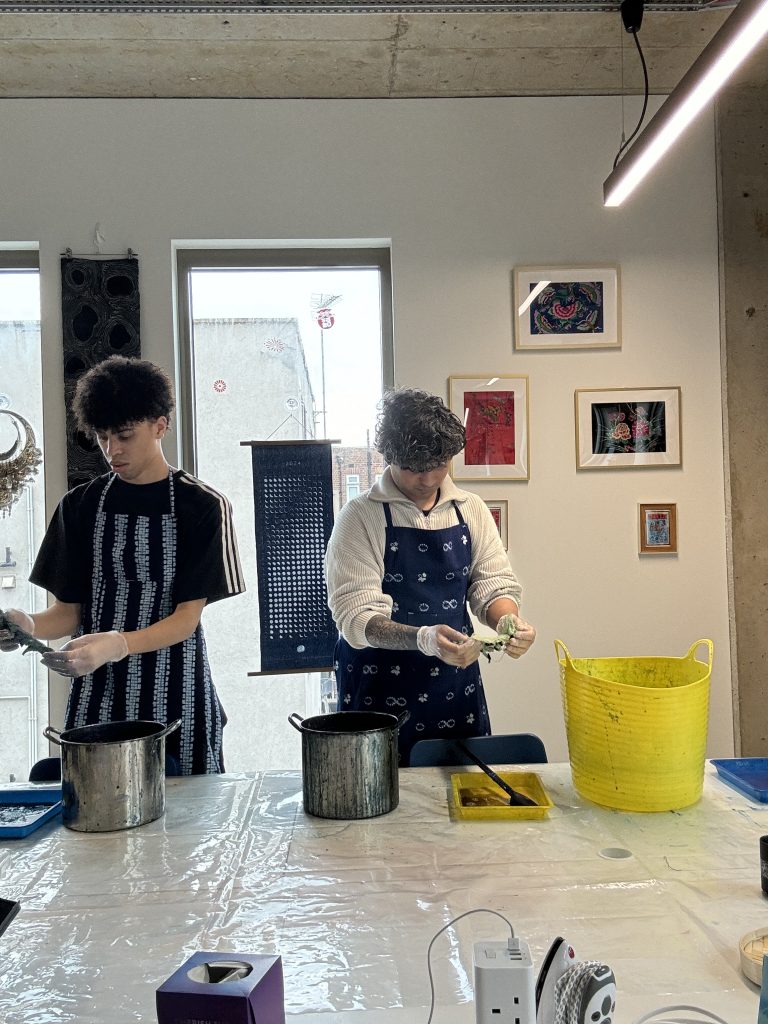
After learning and experiencing this workshop, my three friends have benefited greatly and have a new and deep understanding of China’s ethnic minority traditional culture. This experience also made us realize that the inheritance and appreciation of culture is not as simple as learning skills; it also includes understanding and respecting the people and their stories behind these skills. Every culture has its uniqueness. Through such activities, we can cross cultural boundaries, enhance understanding and respect, and thus cherish these diverse and precious cultural heritages more.
———————————————————————————Feedback:
Neelabh:
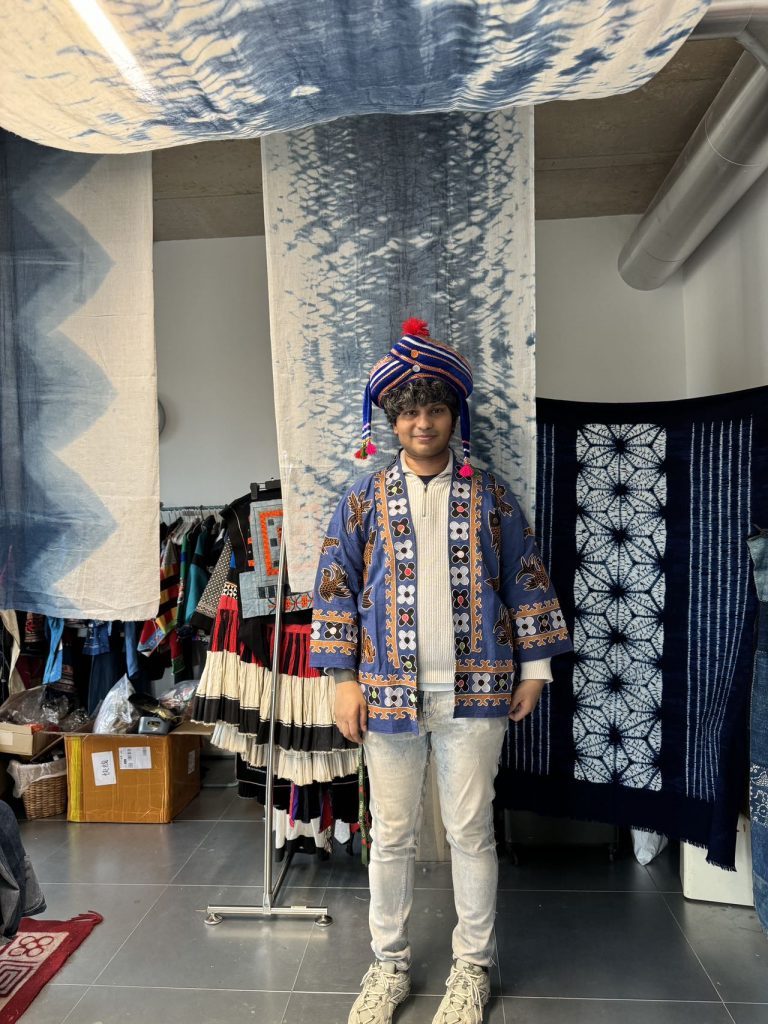
I was invited to participate in an interactive workshop by Lin on the 9th of September. The workshop was organised by Yiran of YiCraft in NW London and consisted of a brief history of the traditional indigo tie-dye craft of the Bai minority followed by a practicaldemonstration. Yiran explained that she was a part of this ethnic minority in China. The workshop was set in her beautiful studio, adorned with many examples of Chinese ethnic crafts and prominently featured indigo dyed textiles using multiple traditional techniques including batik and screen print. Large panels of indigo dyed textile floated above our heads and draped the walls. Traditional costumes of the Bai tribe decorated the mannequins scattered around the periphery of the room and soft Tibetan chant music played at an ambient volume. We sipped some freshly brewed tea as Yiran told us the history and relevance of the Bai tribe traditions and how it was related to other textile traditions ranging from Japan, South-east and South Asia and into parts of Africa. These regions shared some practices but had their own history and traditions when it came to colour and design. It was a fascinating peek into an ancient tradition that we were today going to participate in. The history and storytelling was a large part of appreciating the workshop. As we sipped our tea, it was evident that this was not going to be a simple tie-dye workshop, but one where we intimately connected with the Yiran’s culture. It was clear that she had a deep connection and love for where she came from. Her understanding of the history made us look at the humble blue dye with fresh eyes. She had succeeded in not just sharing her heritage with us, but inviting us into the region of China that the Bai tribe inhabited. To me, I felt a profound connection with the people who lived across the border of my country of India. We had been divided politically for over 70 years, by the borders of the modern nation states of India and China, but we shared a unique link for thousands of years before that. A link that was as ancient as human trade in textile knowledge and as deep blue as the stains of indigo that we were about to oppress on our pieces of cloth.
As we sat and meticulously put needle to thread, to squeeze, scrunch and tie our plain white pieces of fabric together into distorted yet promising forms, the Tibetan chants played in the background. The Tibetan plateau lay to her west, and to my north. A sense of meditative calm had overcome us all. With this practice of sharing of tradition, I felt a bond that on a casual day would have gone completely unseen. Here, ten thousand miles away from our home countries, on a small island off the coast of a different continent, neighbours found themselves. I felt a deep appreciation for the preservation work Yiran is doing here in London. The stories of a people, the land they come from and the beauty that inspires them, their hopes and dreams from centuries ago, preserved and shared so graciously with me. As we sat there, Yiran shared pictures of the mountains in her village, the water that reflected the gentle blue sky in the early morning, a picture that almost seemed dyed by indigo itself. To say this experience was anything less than spiritual, would be an understatement.
Emma:
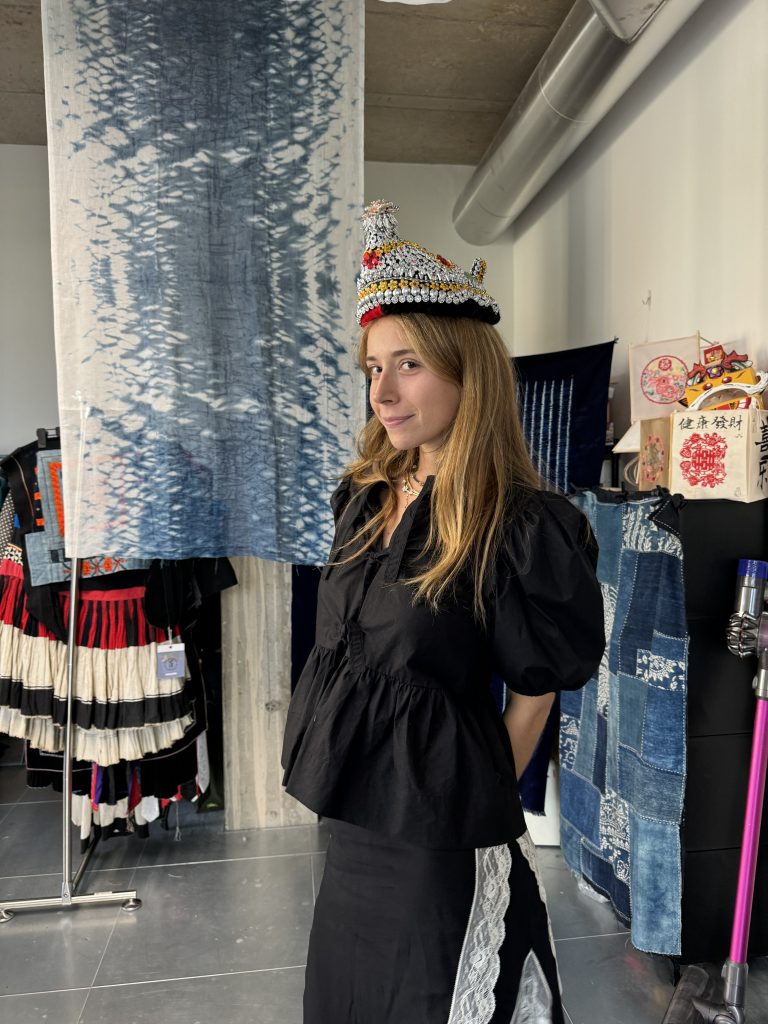
I am a student at CSM with an MA in Applied Imagination. Today, Lin invited me to an indigo workshop in London. This experience truly inspired me, especially the person who explained the history, culture, and her heritage.
I had never done that before, and I went there without really knowing what we would do and expecting everything and nothing at the same time. I learned how to use a needle and create something that is from Dali in China. I thought that this workshop was very powerful and meaningful. We talked and listened to everything, trying on clothes and unique species from China made with indigo. I went to this workshop, changed, and now have a different mindset regarding indigo and cultural appreciation. Everyone should try to listen to and appreciate each other’s culture without judgment or violence. We are all different, and this workshop was truly mind-opening.
I am extremely grateful for the chance to learn about and appreciate a minority community’s culture and work and understand its complexity. I am now looking forward to learning more about other communities and their culture as you grow, find beauty in all of this, and create relations and bonds.
Chris:
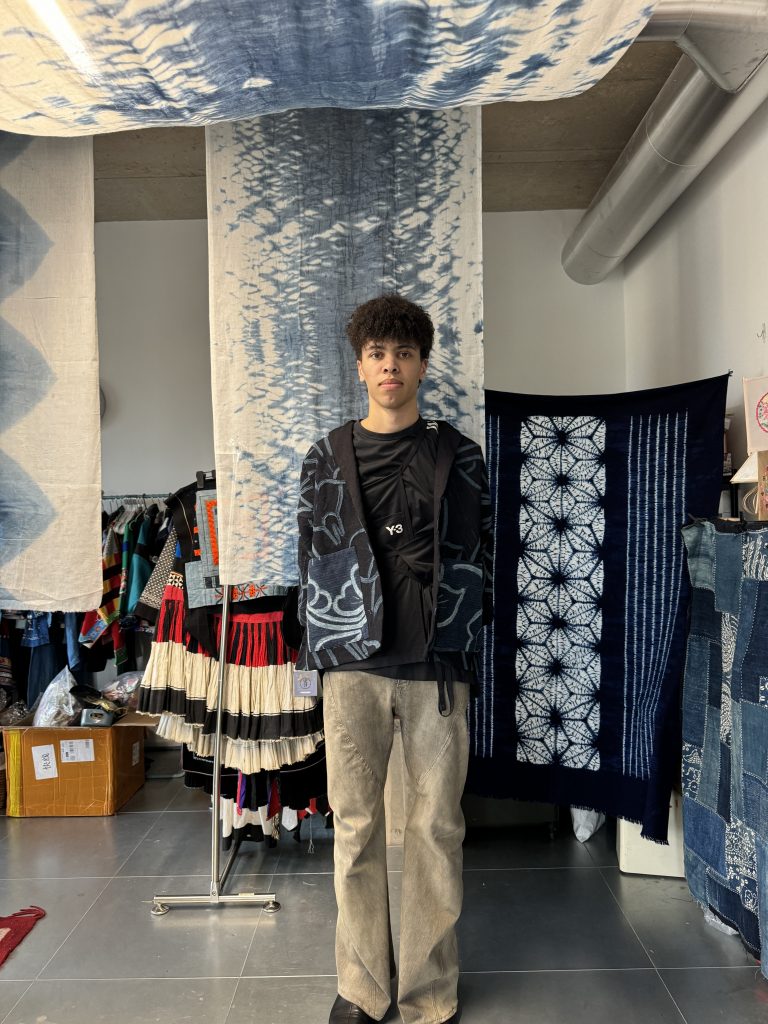
Indigo dye workshop feedback + the skills and knowledge I gained from my participation.
On Monday the 9th of September, I was invited by Lin to participate in a workshop which involved learning the process of indigo dying as well as some stitch and resist techniques, hailing from the Dali region of China. Throughout this process, I, as well as the rest of the participants, were taught by a woman who, while teaching us these beautiful and meaningful techniques, actively widened our knowledge of the community which the workshop was based off of. We learnt about the culture of the region, the name of the people (the Bai people), the ways by which the natural indigo is extracted etc. We also discovered abut the wide scale use of indigo dyeing, which previously we had not learnt about, nor did we realise how widespread it was, for example, the use of natural indigo dyeing has been spread far and wide to places like India, countries within Southeast Asia, as well as many countries within Africa. Learning about the art of indigo during this workshop allowed the team of participants to develop higher levels of appreciation and respect to this industry. Additionally, during the workshop, we acquired an extensive grasp into the meanings behind each of the stitch and resist techniques we were taught that day, such as the butterfly technique, which recounts a tale of love, the technique which, when completed, gives the viewer the image of a set of horse teeth, and many more. On top of all of this, whilst learning and making our own indigo prints, we began to recognise how difficult and intensive this process is to do and repeat, giving the team a higher level of awareness for the people of the region who spend every single day repeating this rigorous process constantly, without fail. I believe that doing workshops like this is imperative for people to partake in as it allows you to start a conversation, exchange cultures in a respectful and appreciative manner, and gives you the chance to widen your understanding of the vast array of cultures in the world. You get to learn the beauty of where another person is from, and with this newly found understanding, it is possible to mesh aspects of this novel world into your own work in a way that doesn’t appropriate, but instead appreciates. Cultures are not things that should be gatekept, as we are all one inhabiting the same planet. However, moving forward, we, as human beings, must learn to share the beauties of where we are from, and mix them together to create something magnificent.